
Everyday struggles of internally displaced communities in Vietnamese urban areas from the 2000s to the present
Phan Phuong Hao
Imagine you are sitting in your comfortable city office, reading online newspapers and stumbling upon preconceptions about urban residents. The urban poor do not exist, nor does urban displacement, for instance. Perhaps you would find them convincing. As a good citizen, I would be inclined to feel the same. Yet years of development work have taught me otherwise. I gradually learned that these preconceptions, in most cases, fail to capture realities. It might be easy to claim that poor or displaced people are far away from us. In fact, we are simply blind to their existence. This essay aims to shed light on these misconceptions and, hopefully, make these communities more visible to the public eye.
Broadly speaking, the issues of internally displaced people (IDPs) in urban areas appear to stay off the radar of states and international organizations until quite recently. This is partly because IDPs are not recognized as refugees. IDPs are, by definition, forced to leave their usual residential settings but still remain within their national borders; therefore, they are not protected by international laws, including the 1951 Refugee Convention.
Previous studies and policy discussions have largely focused on conflict or environmental causes of forced displacement. Little is known about the specific groups of marginalized urban residents who are involuntarily removed to make way for large infrastructure projects and urban development (Neef and Singer, 2015). Predominantly seen as financially compensated, thus better off than other internally displaced communities, the everyday struggles of displaced communities around the loss of livelihoods and perhaps identities in urban areas rarely make it into the headlines of international media outlets.
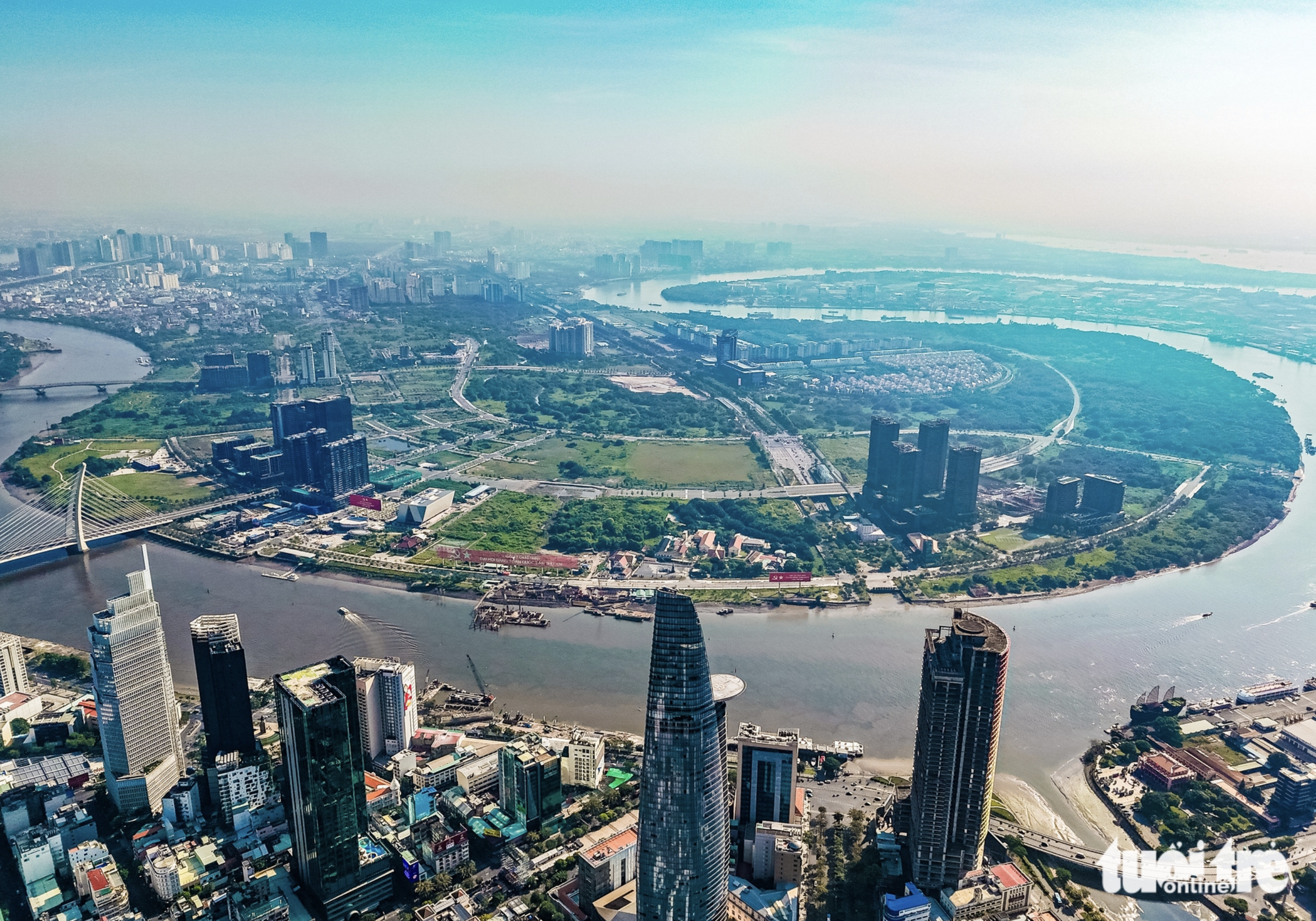
Let us now zoom in on Vietnam to understand how urban displacement sits, sometimes quite uncomfortably, within the official discourse of development and public goods. One case of urban displacement that immediately comes to my mind is the Thu Thiem New Urban Project (Ho Chi Minh City). Located on the Thu Thiem peninsula in HCMC’s District 2 and a river away from District 1, the planned area covers 674 ha and could become the largest inner-city urbanized zone in Southeast Asia. The government eagerly endorsed the original project in 1996, and it involved multiple steps, including land clearing, compensation, and relocation. About 15,000 households are being displaced to build four main roads, functional zones 3 and 4, and the North-South Road axis.
Behind this masterplan of development and desire for modernity lies the harsh reality. The site clearance has been dragging on to this day, and between 1996 and 2026, more than 100 households have been fighting tirelessly to reclaim their land, which they believe the government illegally took. Compared with the reported statistics of 99% of land cleared and nearly 15,000 households successfully resettled, the complaints from 100 households seem like an insignificant percentage. However, as it has taken almost 30 years for the project to kick off (after completing site clearance and resettling the consented residents) and 20 years for the non-consented residents to be heard by the government, we could observe that a new form of displacement is slowly but surely taking shape in the era of “urban demographic explosion” (Luong 2009:1–2) in Vietnam.
What interests me about the case of Thu Thiem is that both media and academic studies have covered it, but with different agendas. Vietnamese journalists have focused on the challenges faced by residents who refused to be resettled. Foreign-based academics have paid more attention to what actually happened behind the scenes within the community as well as between the community and other stakeholders (Nguyen, 2022).
Among the concerns raised by journalists, disputes over deliberately low and miscalculated financial compensation seemed to dominate, followed by grievances over illegal land clearance due to the loss of the original planning map and poor housing conditions after relocation. These concerns, at some point, directly or indirectly pointed to wrongdoing by the local government during the land recovery process, which did not align with the original plan approved by the national government (Harms, 2020). Apart from relatively well-off households that managed to represent themselves at public hearings with the local government, other working-class Thu Thiem residents resisted in their own ways: they either refused to move or moved away and then returned. Those who decided to stay had to make use of makeshift homes or temporary shelters and live amid waterlogged roads, hot weather, and a high risk of property theft. In a way, these residents were forced to live in conditions similar to refugee camps found elsewhere in conflict or environmentally affected zones. The only difference is that they are not seen as refugees or internally displaced people.
If media outlets have so far alerted the public about the challenges of low-quality living conditions of Thu Thiem residents, urban studies experts have gone the extra mile to understand how they dealt with the loss of ‘a relational space that sustains livelihoods and identities’ (Diab, 2025:4). Erik Harms, an anthropologist who has been following the case of Thu Thiem since the early days, refers to this process of land clearance and resettlement as ‘the eviction’ (Harms, 2013). For him, the eviction did more than physically move people from one place to another. It created an irreparable rupture in the everyday lives of working-class residents in Thu Thiem, forcing them to find alternative ways to secure their livelihoods and their (children’s) access to schooling in nearby District 1.
In post-socialist Vietnam, where a well-located piece of land is often seen (and priced) as ‘diamond’ land (đất kim cương), living in Thu Thiem gives residents access to high-value financial and socio-cultural capital. It must have been particularly hard for those who believed their houses were not included in the planned zone because government officials misread the original map, or for those who learned the hard way that their houses could have cost more on the market, to simply pack up and leave. So, they stayed, or moved back to live on the edge of their own houses, and traveled back and forth to lodge complaints against the local government. For them, the waiting or the uncertainty of when the situation could be resolved was probably the most exhausting part.
Similar to refugees who fled the country to avoid war or natural disasters, the waiting would cost the refugees themselves, especially those with financial constraints, the most: their money, their resources, their psyche, and most importantly, their ‘time’ (Harms, 2013). Their relations with ‘time’ remind us of ‘slow violence,’ a concept used in environment-induced displacement studies, which points to ‘the accumulation of adverse effects on individuals and communities, leading to psychological damage, poor health, and diminished lifespans.
In the case of these urban displaced people, the waiting involves living in temporary housing, suffering poor living and environmental conditions, fighting with the legal systems to get their case resolved, and thus being unable to settle physically, psychologically, and socially. As a matter of fact, beyond the discourse of fair compensation and a consensus land recovery process that entrusted 99% of Thu Thiem residents and persuaded them to move, there has been a community of urban displaced people who have been pursuing ‘justice’ on their own terms and who have been living the lives of urban refugees for years. Perhaps we could see them and give them a voice.
The recognition of wrongdoings and the issuance of new laws to address the concerns of 100 affected households, as set out in Decision 70 dated 23rd May 2025, were the latest official response to the almost 30-year-long dispute in Thu Thiem. Earlier this year, the prolonged Thu Thiem case was resolved when a public announcement marked the start of construction of the Thu Thiem New Urban Zone. Although the case has repeatedly appeared in the news since the early 2000s, its residents have not once been seen through the lens of internal displacement.
This essay is one of the first attempts to apply the ontology of displacement studies to rethinking development projects that require land clearance and the relocation of residents. In doing so, it offers a refreshing way to recognize and empathize with the lived experience, loss, pain, and resistance strategies of those forced to move out of inner-city zones and resettle elsewhere without proper resettlement procedures. The lessons from Thu Thiem would be even more relevant in urbanizing Southeast Asia, where land struggles are often complicated by multiple factors, including colonial legacies and capitalist logic.
Disclaimer: The views expressed in this essay are those of the author based on analysing media outlets and academic references; therefore do not necessarily reflect the views of any organisation.
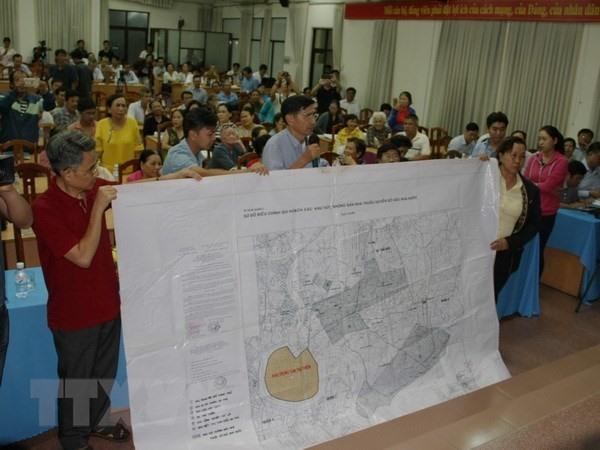
Photo by Tiến Lực, Photo courtesy of VietnamNews
- THEME