
Chuah Hui Yin, independent researcher
Following the Indochina War, UNHCR has served as the de facto registration and protection body for refugees and asylum seekers in Malaysia since the 1970s, a role the Malaysian government has never formally assumed. As of February 2026, there are 215,600 refugees and asylum seekers registered with UNHCR in Malaysia.
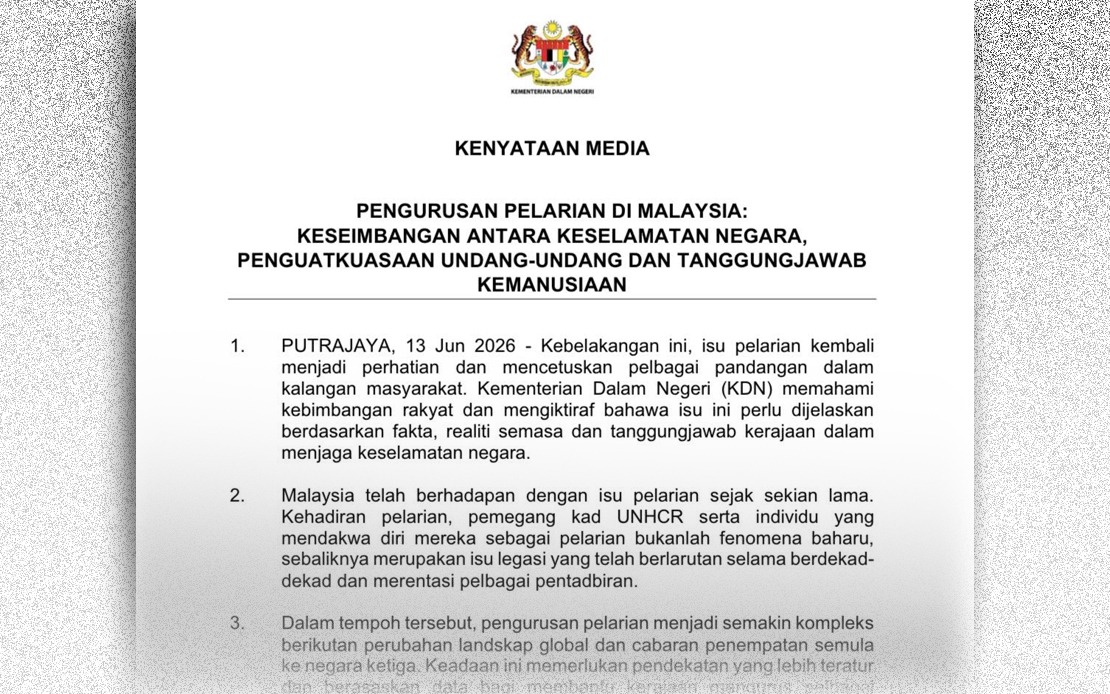
That is now set to change. In January 2026, Malaysia launched the Dokumen Pendaftaran Pelarian (DPP), or Refugee Registration Document, a state-led mechanism that will replace UNHCR’s registration function and serve as the sole recognized documentation for refugees in the country. UNHCR’s role in resettlement will remain. The transition, with the first phase focusing on individuals held at immigration detention centers, is being framed by the Home Ministry as a matter of national security management and administrative improvement.
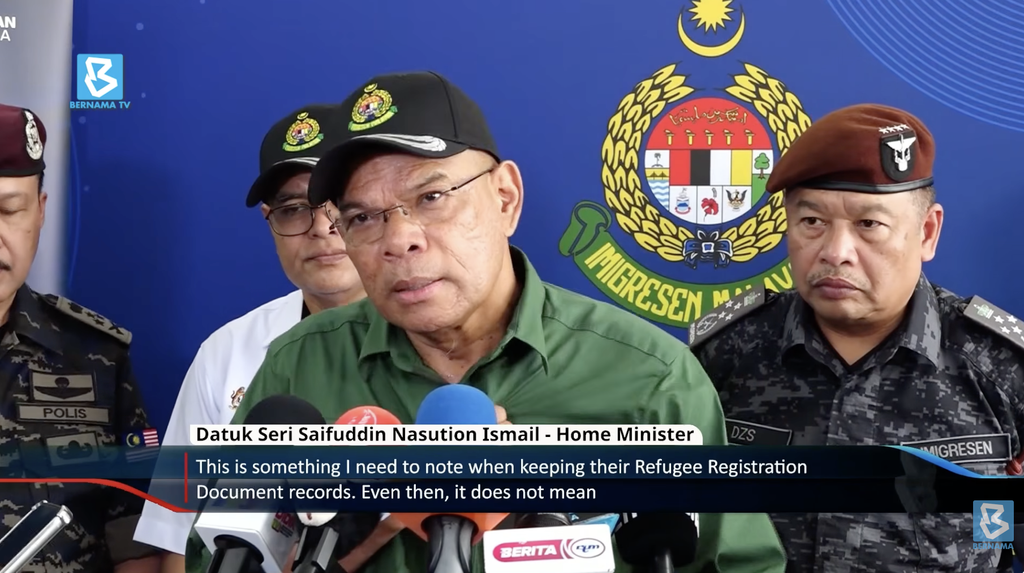
On the surface, state-led registration could signal a step toward greater ownership and formalization of the state’s role in refugee issues. UNHCR has always operated in Malaysia on borrowed legitimacy, dependent on government tolerance rather than international law. In 2022, the Director General of the National Security Council deemed UNHCR “foreign interference” and even suggested shutting down the UN agency. In this context, a state that formally assumes the registration function could, in theory, be more sustainable in ways that an international agency operating at the host government’s tolerance never could.
Furthermore, the shrinking of international protection space, against the background of significant cuts to international humanitarian funding, could signal a diminishing of UNHCR’s capacity to serve as a de facto protection body in Malaysia. This is coupled with shrinking resettlement pathways, largely due to the US government’s ban. In 2025, only 2,585 refugees were resettled from Malaysia, less than half of 7,012 in 2024. In this context, a state-led refugee registration system centered on a rights-based approach may be the more sustainable path forward.
However, the absence of fundamental legal safeguards, as the state has neither signed the 1951 Refugee Convention nor established any domestic legal framework for refugee protection, raises concern. Under the Immigration Act, irregular entry and stay remain a criminal offense. In other words, refugees and asylum seekers are treated as “illegal” migrants under domestic law. In 2025, Malaysian authorities arrested approximately 92,000 irregular migrants, compared with around 12,000 in 2021. Some of those arrested may have a history of displacement. The immigration directorate has signaled that large-scale raids on designated hotspots will intensify further in 2026. The government has also denied UNHCR access to immigration detention centers since 2019, leaving the agency unable to review asylum claims or protect detainees who are registered as refugees.
In a country where refugees are routinely detained and have no right to work or access public services, a DPP mechanism without accompanying legal reform could mean handing registration to the state in the absence of the protective obligation. DPP risks reframing displacement as a matter of migration management and border security, a discourse that has dominated Malaysia’s approach to displacement.
The lack of transparency in how DPP is formulated also raises serious concerns. For instance, the criteria governing who qualifies for DPP, what the screening process entails, what protection it provides, and what implications it has for rejected applications are not publicly known. Malaysia’s previous attempt at state documentation in 2022, the Tracking Refugees Information System, or TRIS, sets a precedent for such concern. As noted by HRW, “refugees were pushed to register under TRIS with promises of the right to work and legal status, but MyRC cardholders continued to be arrested and deported.”
Drawing parallels to Thailand’s National Screening Mechanism
Thailand’s National Screening Mechanism (NSM) offers the closest regional parallel to state-led refugee determination in Southeast Asia outside the UN Refugee Convention. NSM was approved by the cabinet in December 2019 and launched in September 2023. Up to July 2025, eighteen months after its operation, the NSM granted protection to only seven individuals.
The structural parallels between the NSM and the DPP are evident. Both mechanisms are being established by states that have not acceded to the 1951 UN Refugee Convention nor its 1967 Protocols. Both mechanisms embed security ministries and national security councils at their core, with the majority of the 2021 NSM drafting committee coming from national security backgrounds. Similarly, in Malaysia, DPP is mandated by the National Security Council.
Both mechanisms were introduced without the accompanying legal reform that would give the resulting documentation substantive meaning. Under NSM, applicants are considered violators of Thailand’s Immigration Act by virtue of having entered or stayed irregularly. They must be fined and detained before they can request bail and have their NSM application considered, or as Asylum Access Thailand put it, “a protection mechanism that requires harm before it offers help”.
The eligibility criteria embedded in the NSM explicitly exclude migrant workers from its neighboring countries, namely Myanmar, Laos, Cambodia, and Vietnam, whose nationals are most likely to seek refuge in Thailand in case of conflicts or persecution because of their geographic proximity and existing migration networks. This ambiguity between migrant worker and refugee categories forces individuals to choose between labor regularisation and protected status, leading to a system that risks screening out the populations most likely to need protection.
Way forward
What is missing in the discussion is the perspective of refugees themselves. Interviews by Human Rights Watch showed low awareness of the DPP among refugees; among those who are aware, there is a deep sense of uncertainty about it. The sentiment is similarly shared by a refugee-led organization in response to a lack of transparency by the authorities, with concerns about data privacy and protection. There is also uneasiness around the sustainability of the DPP mechanism, especially given the previous registration attempt under the TRIS system. While the first phase of DPP started with individuals held in detention centers, a greater rollout to the broader community would require refugees to voluntarily present themselves to state authorities for registration. This would also mean submitting biometrics and personal information to a government that has detained and deported people carrying UNHCR cards. Meaningful community engagement is therefore essential for building trust and encouraging uptake.
More importantly, while the details of the DPP remain unclear, the mechanism should follow the basic standard for refugee status determination as suggested by Human Rights Watch. This includes rights-based protection standards, transparent eligibility criteria derived from international refugee law, mandatory and accessible appeals processes, and robust data protection guarantees for biometric information. Over the longer term, amending the existing law and formulating domestic legislation on refugee issues that gives DPP legal meaning remains the only durable foundation for a protection system.
The DPP comes at a time when greater state ownership of governance around refugee issues is necessary, as the chronically stretched UNHCR system has long been unable to provide meaningful, durable solutions for the vast majority of those it registered in Malaysia, leaving many in limbo. However, whether it delivers on that promise depends on what the mechanism is designed to do. Thailand’s experience suggests that a state-led mechanism centered on security rather than rights tends to function as a legitimizing tool for existing exclusionary practices, creating gaps between policy design and protection outcomes. Malaysia has the opportunity to chart a different course, but only if the DPP is treated as the beginning of a much harder conversation about what protection actually means for refugees, rather than merely a national security concern.
This essay is part of the Forced Displacement in Southeast Asia Essay Series, under the Research Chair program on Forced Displacement in Southeast Asia, based at the Regional Center for Social Science and Sustainable Development (RCSD) in the Faculty of Social Sciences at Chiang Mai University, Thailand, and supported by the International Development Research Centre (IDRC). The author(s) of this essay series are participants of the Researching Forced Displacement Issues in Southeast Asia Workshop.
- THEME
- Mobility and Border