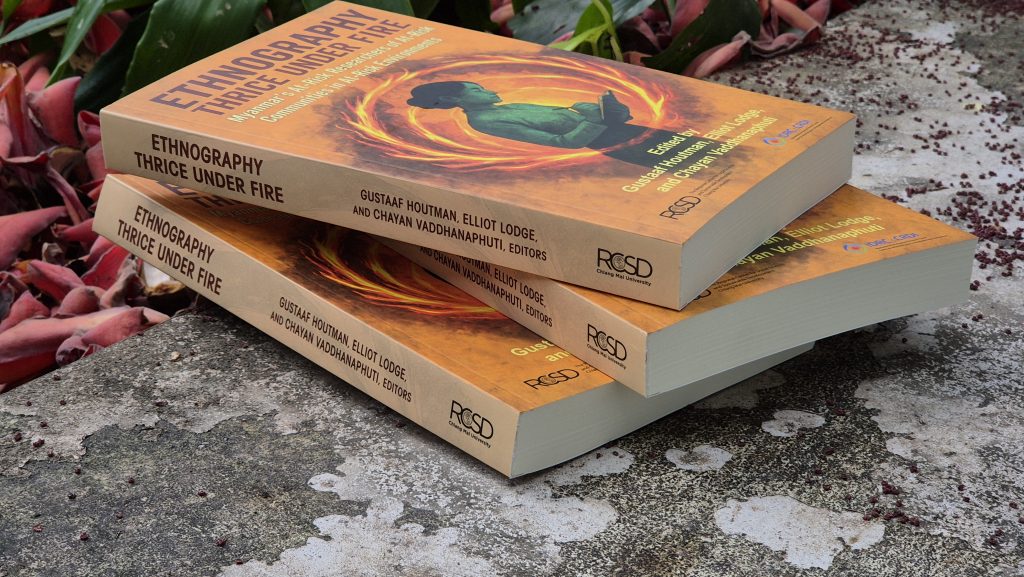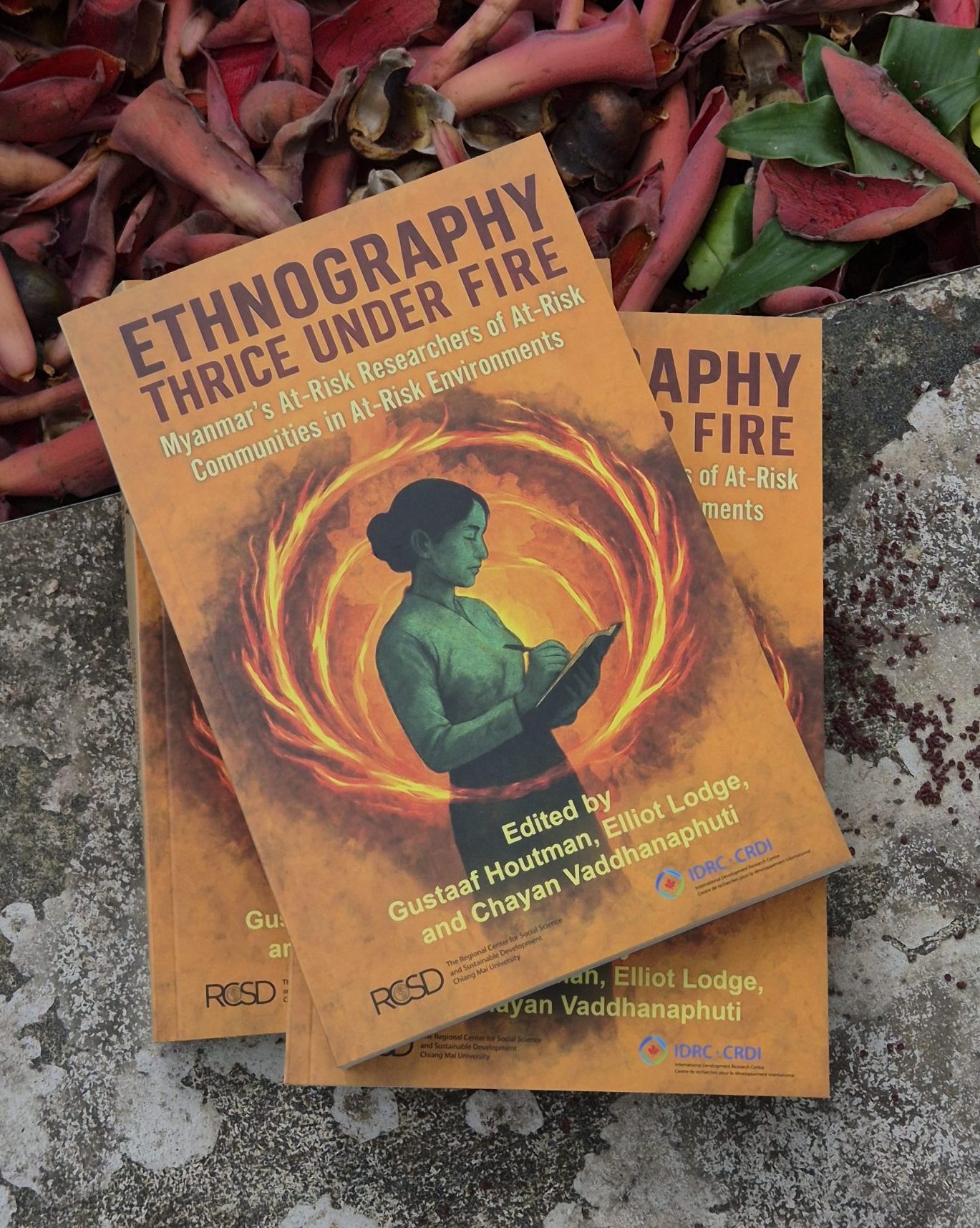
This latest edited volume from RCSD, Ethnography Thrice Under Fire: Myanmar’s At-Risk Researchers of At-Risk Communities in At-Risk Environments brings together the work of ten Myanmar scholars who have continued their ethnographic research after joining the Civil Disobedience Movement (CDM) in the aftermath of the 2021 military coup. Conducting fieldwork while targeted by the state, working without institutional protection, and studying communities under systematic attack, these researchers exemplify what editors Gustaaf Houtman, Elliot Lodge and Chayan Vaddhanaphuti describe as the “thrice under fire” condition: researchers, communities, and environments simultaneously exposed to violence and erasure.
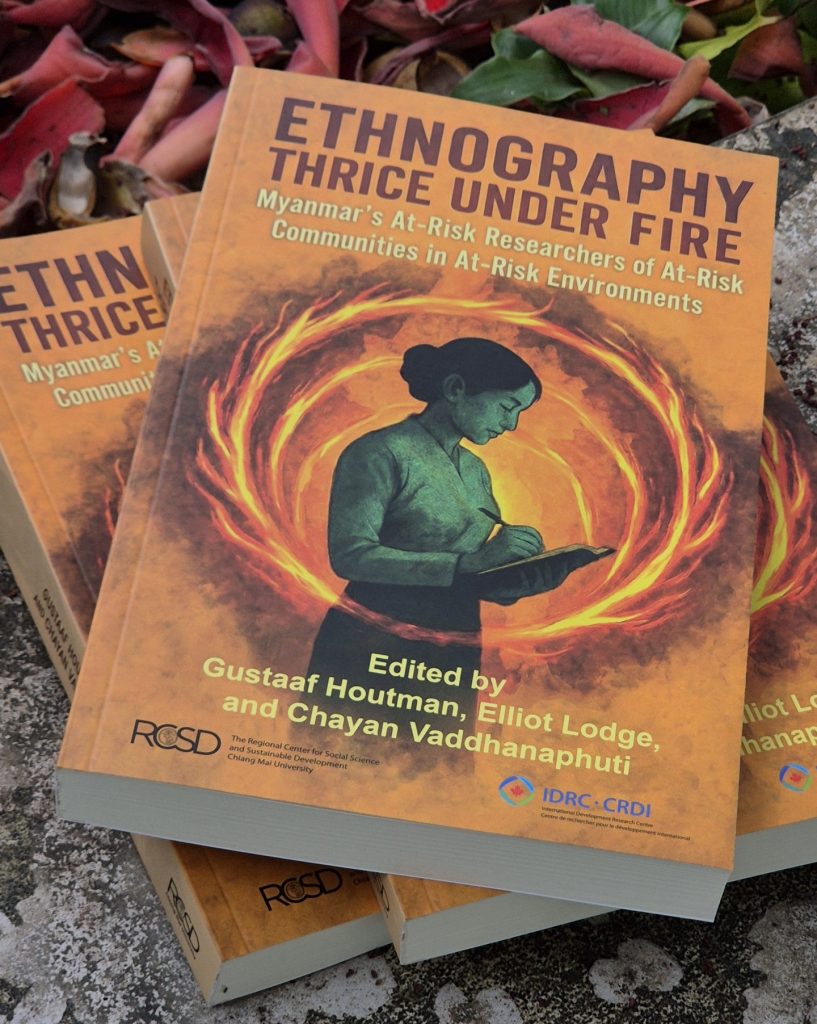
The volume examines how this convergence transforms knowledge production. When researchers share the same risks and vulnerabilities as those they study, ethnography moves beyond detached observation to forms of insight grounded in lived experience. In contexts where communities face deliberate destruction, research becomes an act of preservation, and where academic infrastructures collapse, methods adapt through necessity. The contributors collectively advance three key innovations—experiential validity, preservation epistemology, and resilient methodology—culminating in what the editors term “solidarity knowledge,” forged through shared risk.
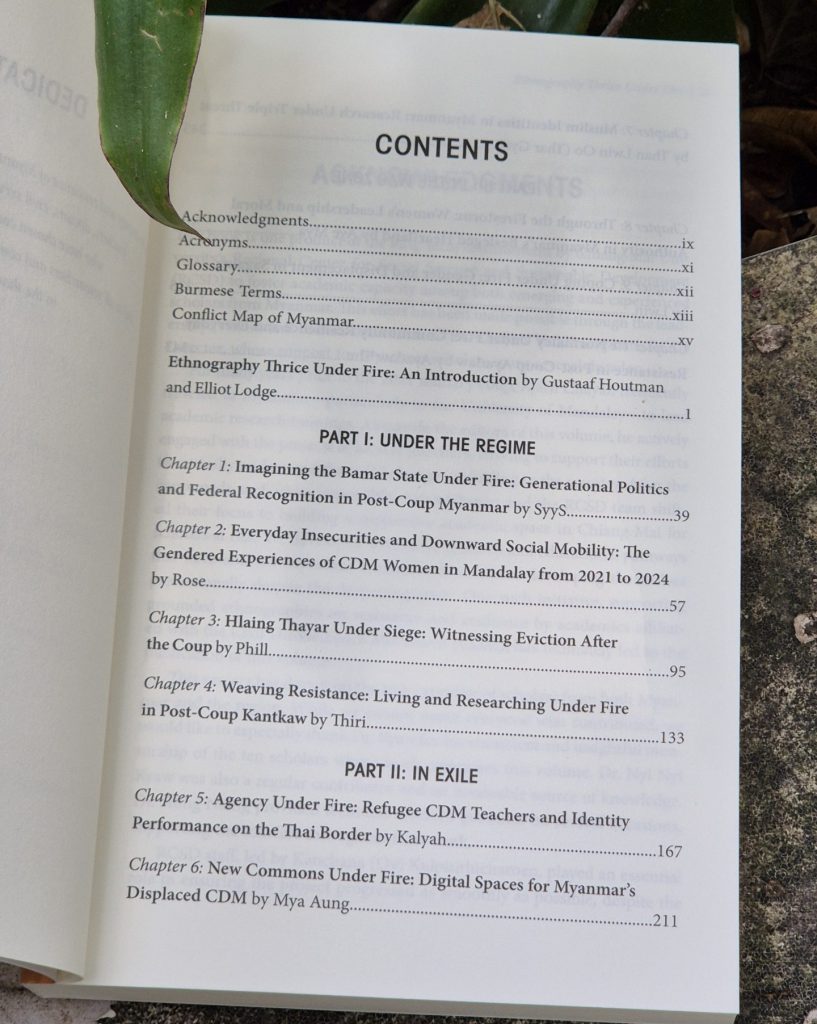
Empirically, the chapters document everyday resistance in besieged communities, women’s moral authority in times of crisis, digital commons created by exiles in Thailand, transformations of social capital in liberated villages, gendered resilience among displaced populations, and the reconfiguration of Myanmar Muslim identity during the Spring Revolution.
Ethnography Thrice Under Fire is an essential contribution to debates on ethnographic method, political violence, and the future of knowledge production under authoritarian rule.
Get the book now in pdf form here, or contact RCSD for printed hard copies.